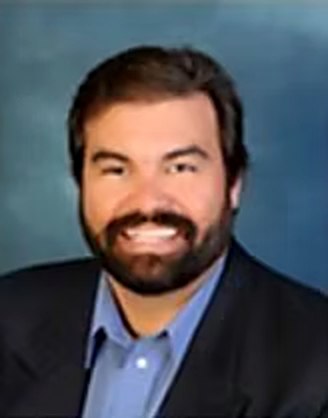
Executive technology and growth leadership, on demand.
I help growth-stage and enterprise companies modernize, secure, and scale - stepping in as a Fractional CTO or Chief Growth Officer to turn emerging technology into measurable business outcomes.
From executive discovery to close - with the KPI and forecasting discipline that gives leadership clear visibility.
Case file
Technology modernization, under fire.
One engagement, told in full. Ask me to walk you through it on a call.
Healthcare Multi-site provider network
Ransomware recovery, compounded by years of technical debt that was holding growth back. ETS took us from incident to a multi-generational modernization plan.
CIO, healthcare firm - hospitals, critical care, emergency care, clinics
Situation
A ransomware event hit an estate already carrying heavy technical debt - risk, compliance exposure, and operating cost all trending the wrong way.
Constraint
Care delivery could not pause. Every move had to be sequenced around hospitals, critical care, emergency care, and clinics staying live.
Delivered
A multi-generational technology and deployment plan: recover first, then retire the debt, then modernize - with risk and compliance mitigated at each step.
Outcome
Lower operational cost, reduced risk and compliance exposure, and an improved patient care experience across every site type.
The plan, in three generations
Horizon one, recover: ransomware recovery and risk containment while care delivery continues. Horizon two, modernize: retire technical debt and close compliance exposure with a sequenced deployment plan. Horizon three, scale: lower operating cost and an improved patient care experience. Coverage spans hospitals, critical care, emergency care, and clinics.
Recover
Generation 01
Ransomware recoveryRisk containmentCare delivery stays live
Modernize
Generation 02
Retire technical debtClose compliance exposureSequenced deployment plan
Scale
Generation 03
Lower operating costImproved patient care experienceGrowth unblocked
Risk Transformation Dashboard. Four dimensions start elevated on the left and flow down to lower risk states on the right. Ransomware exposure becomes Mitigated, Technical debt becomes Retired, Compliance exposure becomes Closed, and Operating cost becomes Lowered.
POSTURE OVERVIEW:EXPOSURE DOWN & DEBT RETIREDTRANSFORMED
How I work
Why boutique beats bench.
One senior operator. Direct access. No handoffs.
Operating Model diagram. The Bench side shows multiple account layers, handoffs, and distance from execution. The One Operator side shows direct access from You to Architecture, Deal Room, and Outcome with warm gold highlight.
You get me, not a bench.
DIRECT
No account layer, no handoffs, no junior team learning on your budget. The person you meet is the person who does the work.
Operator, not observer.
◇ HANDS-ON
Hands-on with the architecture and hands-on in the deal room. Advice that has to survive contact with production and procurement.
Proof over promises.
✓ MEASURED
No inflated claim counts here. One engagement told in full above - and on a call, I will walk you through exactly how it was run.
Contact
Put an executive in the chair this quarter.
A free initial consultation is enough to tell whether the gap is technology, growth, or both - and what I would do about it first.
Office611 South Dupont Highway, Suite 102 Dover, DE 19901
About Emerging Technology Solutions
The operator behind the practice.
A boutique advisory dedicated to helping businesses navigate and excel in the digital age - with the personalized attention of a boutique and enterprise-grade expertise.
David Clingan Founder / CEO - Dover, Delaware
Founder
David Clingan
Global CTO - Founder / CEO
I am a Global CTO with 25+ years of experience modernizing Fortune 500 companies - driving efficiency, security, and growth by bridging innovation and adoption. That work has meant reducing cost, accelerating transformation, strengthening resiliency, building secure frameworks, and advising C-suite leaders on sustainable architecture governance.
I honed that craft at Cisco Systems and EDS-HPE: modernizing enterprise architecture and driving cybersecurity, data center and hybrid cloud, and AI innovation and adoption that deliver business results. Along the way, the part I care about most is leading cross-functional teams by example - and growing the talent around me.
What excites me as a problem solver is connecting the dots: creating win-wins for clients across diverse industries and business complexities, with people, process, and technology working as one framework - simplification, security, scalability, speed, and sustainability.
25+ yearsGlobal CTOFortune 500 modernizationCisco Systems alumEDS-HPE alumCISSP
"Connecting the dots - creating win-wins for customers across diverse industries."
Domain depth
Three disciplines, one operator.
AI, cybersecurity, and hybrid cloud - the same three domains, from Cisco and EDS-HPE through today, deployed across multiple client engagements in healthcare, manufacturing, BFSI, and retail. The value sits where they overlap: innovation adopted, not just admired.
Three intersecting domains: cybersecurity, data center and hybrid cloud, and artificial intelligence. At the intersection of all three: innovation and adoption.
Mission
Empower transformation.
Empower organizations with innovative technology solutions that drive transformation, efficiency, and sustainable growth - bridging cutting-edge technology and practical business implementation.
Vision
The trusted advisor.
To be the trusted advisor for organizations leveraging emerging technologies for competitive advantage - a future where technology adoption is seamless, strategic, and transformative.
Difference
Partner-level attention.
The agility of a boutique practice combined with enterprise-grade expertise. Every client receives partner-level attention throughout the journey.
Core values
How every engagement is run.
Customer obsessionUnderstand outcomes, requirements, use cases, current-state challenges, and future-state architecture - then a gap analysis, a 30-60-90-day plan, and a 1-2-year roadmap aligned to outcomes.
Innovation firstAt the forefront of technology trends, so you benefit from what is genuinely cutting-edge.
Excellence in deliveryThe highest standards of quality and professionalism, without exception.
Collaborative partnershipWorking alongside your team - knowledge shared, capability built to stay.
Four values connect to the center of every engagement: customer obsession, innovation first, excellence in delivery, and collaborative partnership.
Comprehensive technology consulting designed to differentiate your business and drive measurable results - delivered hands-on, by me.
The two executive roles
Fractional
Fractional CTO
Your technology executive, on demand.
I step in as your technology executive to set strategy, modernize architecture, and drive secure AI and cloud adoption - without the cost of a full-time hire. From product acceleration and DevSecOps to ISO 27001 readiness and board-level reporting, I align your technology roadmap with your growth plan.
Recent impact: scaled a high-growth AI platform 5xRevenue up 60% in seven months
I own the growth engine - pipeline, go-to-market strategy, partnerships, and the full enterprise sales cycle from executive discovery to close. I build repeatable GTM practices, including Agentic AI offerings, plus the KPI and forecasting discipline that gives leadership clear visibility.
Recent impact: $24M in new recurring revenueGTM practice built from zero in five months
I help you move from AI experiments to production impact - designing and deploying machine learning, generative, and agentic AI solutions that automate work, surface predictive insight, and create real competitive advantage. Having built an Agentic AI go-to-market practice and led enterprise AI adoption at scale, I keep every initiative tied to a measurable business case.
Cloud
Cloud & Data Center Transformation
I lead data center and hybrid cloud transformations that make your infrastructure faster, more resilient, and more cost-efficient. Drawing on decades architecting enterprise environments, I plan and execute migrations and modernizations that reduce total cost of ownership while improving performance, scalability, and multi-cloud agility.
Security
Cybersecurity & Compliance
As a CISSP-certified security leader, I architect enterprise-grade defenses and compliance governance across ZTNA/Segmentation, SASE, and SDWAN architecture. I lead ISO27001, HIPAA, PCI-DSS, and SOC2 compliance while securing sensitive PII and PHI data. By aligning DevOps, SecOps, and AIOps with executive Governance, I embed security into your operating rhythm so it accelerates business growth.
I translate your business goals into a clear, executable technology roadmap. Working alongside your leadership, I align architecture, investment, and priorities into a multi-generational plan - backed by the governance, KPIs, and executive reporting that move an organization from debate to measurable results.
Innovation
Innovation Consulting
I help you separate signal from noise in emerging technology - evaluating what is real, what is ready, and what is worth adopting for your business. As a lifelong continuous learner with hands-on depth in AI, cybersecurity, and cloud, I help you adopt the right innovations early and with confidence.
Enablement
Technology Training
I do not just deliver solutions - I build your team's capability to own them. Through hands-on training and knowledge transfer, I upskill your engineers and leaders on modern architecture, security, cloud, and AI, so the value of every engagement outlasts my involvement.
Operating architecture
One architecture, secured end to end.
Where I operate in your stack - and why security is a plane that crosses every layer, not a padlock bolted on at the end.
Four stacked layers: growth and go-to-market (pipeline, partnerships, enterprise sales); strategy and governance (roadmap, KPIs, executive reporting); applications and AI (machine learning, generative AI, agentic AI); platform (data center, hybrid cloud, multi-cloud). Security and compliance crosses all four layers: zero-trust, ISO 27001, DevSecOps. People and enablement is the foundation: training and knowledge transfer.
A structured methodology that ensures successful delivery and lasting impact.
Step one, discovery: deep dive into your business challenges, goals, and existing technology landscape. Step two, strategy: develop tailored roadmaps with clear milestones, timelines, and success metrics. Step three, design and validation: enterprise architecture design and digital-twin solution validation to deliver outcomes at scale. Step four, implementation: execute with agile methodologies and continuous stakeholder engagement. Step five, optimization: monitor, measure, and continuously improve for sustained business value.
Discovery
Deep dive into your business challenges, goals, and existing technology landscape.
Strategy
Tailored roadmaps with clear milestones, timelines, and success metrics.
Design & validation
Enterprise architecture design and digital-twin solution validation to deliver outcomes at scale.
Implementation
Execution with agile methodologies and continuous stakeholder engagement.
Optimization
Monitor, measure, and continuously improve for sustained business value.
Engagement models designed to fit your budget and timeline, with clear deliverables at every stage - and no ambiguity about what you receive.
Always included
What you get in every engagement.
Three core deliverables ship with every engagement, whatever its shape.
01 Deliverable
Comprehensive documentation
Detailed technical specifications, architecture diagrams, and implementation guides - the estate on paper, not in someone's head.
02 Enablement
Knowledge transfer
Hands-on training sessions and workshops that empower your internal teams to own what was built.
03 Assurance
Post-implementation support
An extended support period to ensure smooth operation and address anything that surfaces after go-live.
Custom Tailored Model
Every organization is unique - so is every engagement.
I shape a tailored engagement model around your specific needs, timeline, and budget. Scope, cadence, and pricing get defined together on a call - transparently, before any work begins.
Trusted Technical Advisor across diverse industry vertical solutions that deliver unprecedented outcomes across diverse technology innovation and adoption challenges that unlock time to value at scale.
Power generation, distribution, and sustainability
Common challenges
Grid modernization
Renewable energy integration
Demand forecasting
Asset management
How I solve them
Smart grid technology
IoT sensor networks
AI-powered load balancing
Predictive asset maintenance
Cross-industry
Expertise that transcends sector lines.
Best practices and innovations from one sector, applied to solve challenges in another.
Cross-pollination
One operator, six sectors.
Best practice does not stay in its lane. What works in one vertical gets carried into the next - because the same person runs them all.
Interactive Orbital System. Central node One Practice connects to six industry verticals: Healthcare, Financial Services, Professional Services, Retail and E-Commerce, Energy and Utilities, and Manufacturing. Shared intelligence and operating patterns cross-pollinate across all six sectors.
OPERATING INTELLIGENCE:CROSS-INDUSTRY KNOWLEDGE COMPOUNDINGSYSTEM ACTIVE
Compliance
Regulatory compliance
From HIPAA in healthcare to SOX in finance - complex regulatory environments, navigated with compliant technology.
Experience
Customer experience
Patient portals or e-commerce platforms - digital experiences that drive engagement and loyalty.
Operations
Operational excellence
Process automation and optimization that works across manufacturing, services, and logistics.
Analytics
Data-driven decisions
Advanced analytics and business intelligence, applicable across all industries for sharper strategic insight.
Strategic adoption of breakthrough technologies that create competitive advantage - evaluated on maturity, business fit, and ROI before a dollar is committed.
Maturity bands
How I classify what's coming.
Signature
The emerging technology stack.
AI capability rests on data and cloud - and both stand on security and platform. Every adoption decision is made with the whole stack in view.
A stack diagram. AI sits at the top, connected down to data and cloud. Data and cloud stand on security and platform, which are linked as the foundation.
An S-shaped adoption curve rising over time. Zone one, emerging: five or more years to mainstream. Zone two, rapid growth: two to five years. Zone three, mainstream adoption: immediate value. A breakthrough marker sits at the curve's steep inflection, where revolutionary impact transforms industries.
Horizon 3 5+ Yrs
Emerging
Early research phase - 5+ years to mainstream.
Horizon 2 2-5 Yrs
Rapid growth
Proven pilots - 2 to 5 years to mainstream.
Horizon 1 Now
Mainstream adoption
Widely adopted - immediate value.
Inflection Impact
Breakthrough
Revolutionary impact - transforming industries.
AI / ML
Artificial Intelligence & Machine Learning
Transform business operations with intelligent automation and predictive capabilities.
Computer vision for quality controlPredictive demand forecastingNLP for customer servicePersonalized recommendation engines
Quantum
Quantum Computing
Prepare for the quantum era with quantum-safe cryptography and early-stage applications.
Post-quantum cryptographyComplex optimizationDrug discovery and molecular simulationPortfolio optimization
Edge
Edge Computing
Process data closer to its source for real-time insight and reduced latency.
Real-time video analyticsIndustrial IoT and smart manufacturingAutonomous vehicle processing5G network optimization
Blockchain
Blockchain & Distributed Ledger
Build trust and transparency with immutable, decentralized record-keeping.
The rise of agentic AI introduces novel challenges that expose gaps in some traditional IAM approaches. While foundational machine IAM practices can be leveraged today, key capabilities gaps remain in most organizations.
Framework
The technology adoption framework.
A structured approach to evaluating and implementing emerging technologies for maximum business value.
Step one, assessment: evaluate technology maturity, business fit, and ROI potential. Step two, pilot: proof-of-concept development with limited scope and clear success metrics. Step three, scale: production deployment with phased rollout and risk mitigation. Step four, optimize: continuous improvement and expansion to new use cases.
Assessment
Evaluate technology maturity, business fit, and ROI potential.
Pilot
Proof-of-concept with limited scope and clear success metrics.
Scale
Production deployment with phased rollout and risk mitigation.
Optimize
Continuous improvement and expansion to new use cases.
What I am seeing across engagements - on modernization, AI adoption, security, and growth. Written for the executives who have to decide, not for the algorithm.
The multi-generational roadmap: why one-year technology plans fail
David ClinganJul 28, 20264 min read
Every January, technology organizations publish a twelve-month plan. By April it is fiction. Not because the teams are weak, but because the plan was built on three assumptions that never hold: that the estate is understood, that funding arrives on schedule, and that operations will politely pause while you modernize underneath them.
Technical debt breaks the first assumption. Debt is invisible in planning documents and very visible in delivery, and it compounds quietly until it decides your schedule for you. Funding cycles break the second: transformation spend rarely fits a single fiscal year, so annual plans quietly optimize for what can be finished by Q4 rather than what the business needs. And the third assumption fails hardest in environments that cannot stop - the engagement told in full on this site ran across hospitals, critical care, emergency care, and clinics, where "pause the systems while we upgrade" was never on the table.
Plan in generations, not quarters
A generation is a coherent state of the estate with its own purpose, not a time box. In practice I use three. The first exists to recover and stabilize: contain risk, restore trust in the platform, and stop the bleeding - without breaking the operation that pays for everything. The second exists to modernize: retire the debt deliberately, close compliance exposure, and sequence deployment so each move is reversible. The third exists to scale: lower the operating cost, and let the business grow on top of what is now solid.
Multi-generational roadmap showing three connected phases: Generation 1 Recover, Generation 2 Modernize, and Generation 3 Scale.
GEN 01
RECOVER
Contain Risk
Contain risk, restore trust in the platform, and stop the bleeding without breaking live operations.
GEN 02
MODERNIZE
Retire The Debt
Retire technical debt deliberately, close compliance exposure, and sequence reversible moves.
GEN 03
SCALE
Grow On Solid Ground
Lower operating costs and expand the business rapidly on top of a resilient enterprise platform.
Three generations, one estate — each with its own purpose
"A roadmap is not a promise of features. It is a risk instrument the board can govern."
What makes it governable
Generations only work with governance attached: a small set of KPIs that describe posture rather than activity, executive reporting that says what moved and in which direction, and decision rights that are written down before they are needed. When the board can see risk falling, cost falling, and capability rising across generations, funding conversations change character - you are no longer defending a project, you are steering an instrument.
The test of a good roadmap is not whether it survives the year. It is whether, when something breaks - and something will - the plan tells you what to protect first. Annual plans rarely answer that. Generational ones are built around it.
From AI pilots to production: the business-case discipline
David ClinganJul 14, 20264 min read
Ask an enterprise how many AI pilots it has run and you get a proud number. Ask how many are in production, owned by a named executive, with a measured effect on a P&L line - and the room goes quiet. Pilot purgatory is not a technology problem. It is a discipline problem, and it has three usual causes.
First, no one owns the number. A pilot with an enthusiastic sponsor but no owner accountable for a business outcome is a demo, whatever it costs. Second, demo-grade data: pilots run on curated extracts, then meet production data - late, inconsistent, and governed by systems nobody consulted - and die on contact. Third, governance arrives last. Access, auditability, and failure handling get designed after the pilot succeeds, which is exactly when nobody wants to slow down.
The business-case test
Before I fund any AI initiative, it has to answer three questions in one page. Which P&L line moves, and who owns it? What is the baseline today, measured, not remembered? And who has the right to kill it, at which checkpoint? If those answers do not exist, the initiative is research - which is fine, as long as it is funded and judged as research.
"A pilot you kill on evidence is a success. A pilot that lingers unowned is a tax."
AI Decision-Gate Journey. A pilot moves through three interactive decision gates: Owner, Baseline, and Kill Rights. Passing all three reaches Production. Failing any gate routes downward to Retire Proudly.
DECISION-GATE SYSTEM:AI PILOT → PRODUCTION GOVERNANCEGOVERNANCE ACTIVE
INITIATION
PILOT
Proof of Concept
GATE 01
OWNER?
P&L Accountability
Which P&L line moves, and who owns it?
GATE 02
BASELINE?
Measured Metrics
What is the baseline today — measured, not remembered?
GATE 03
KILL RIGHTS?
Governance Checkpoint
Who has the right to kill it at which checkpoint?
ACTIVATED STATE
PRODUCTION
Enterprise Scale
↓FAIL ANY GATE → RETIRE PROUDLY
Three questions gate production. Failing them is a result, not a failure.
What production actually requires
Getting from a working demo to production impact means four unglamorous things: a data contract with the systems the model depends on, an evaluation harness that runs continuously rather than once, a human override path that operations trusts, and unit economics that survive scale - because inference that is cheap at pilot volume can be ruinous at production volume.
Agentic AI raises the bar again. When systems take actions rather than produce answers, the governance questions stop being theoretical: what may it do, what must it never do, who is notified, and how is it stopped. I build the go-to-market for agentic offerings as well as the architecture, and the pattern holds on both sides of the table - the buyers who move fastest are the ones whose governance answers already exist.
Run fewer pilots. Own each one. And retire them proudly when the evidence says so - the portfolio gets stronger every time you do.
The padlock model of security is easy to recognize: the work gets designed, then security is bolted on at the end - a gate, a review, a scan before release. It satisfies nobody. Delivery teams experience security as friction, security teams experience delivery as risk, and the audit still finds the gaps, because gaps live in the architecture, not at the gate.
The alternative is to treat security as a plane - a layer that crosses everything, the way it is drawn in the operating architecture on this site. It touches the growth motion, because enterprise buyers audit you before they trust you. It touches strategy, because risk posture is a board topic. It touches the application layer, where AI systems create new classes of exposure. And it touches the platform, where identity and segmentation actually live.
Zero-trust is an architecture, not a purchase
Zero-trust fails when it is bought as a product category and succeeds when it is designed as a posture: verify explicitly, grant least privilege, assume breach, and make the blast radius of any single failure small. None of that arrives in a box. It arrives through architecture decisions made early, which is why security has to sit inside the design conversation rather than at its exit.
Comparison of Security Models. Padlock Model: Security is bolted on at the exit after all four layers. Security Plane Architecture: Integrated security plane cuts across all four layers: Strategy, AI & Application, Platform & Identity, and Infrastructure.
SECURITY ARCHITECTURE MODEL:REACTIVE EXIT GATE VS INTEGRATED PLANEZERO-TRUST ACTIVE
REACTIVE MODEL
PADLOCK
Bolted-on at the Exit
01Strategy & GTMUnprotected
02AI & ApplicationUnprotected
03Platform & IdentityUnprotected
04InfrastructureUnprotected
EXIT SCANNER & AUDIT GATE
WAITS AT THE EXIT · CREATES FRICTION
ARCHITECTED POSTURE
PLANE
Crosses Every Layer
01Strategy & GTMBoard Posture
02AI & ApplicationModel Safety
03Platform & IdentityZero-Trust
04InfrastructureMicro-segmented
Same layers. The plane crosses them; the padlock waits at the exit.
"Security that is architected in closes deals. Security that is bolted on delays them."
Compliance as an operating rhythm
The same logic applies to compliance. ISO 27001 readiness treated as an annual scramble produces binders. Treated as an operating rhythm - controls owned by named people, evidence produced by the systems themselves, exceptions visible weekly - it produces something more valuable: a security story you can tell a customer's auditors without rehearsal. In enterprise sales, that story is worth real pipeline. I have watched security move from the objection list to the differentiation list in a single procurement cycle, purely because the posture was real and legible.
Draw security as a plane, fund it as a plane, and staff it as a plane. The padlock never protected much anyway.
Ransomware: the first 72 hours, and the year after
David ClinganJun 16, 20264 min read
I have led an organization through ransomware recovery - the engagement is told in full on this site - and the clearest lesson is uncomfortable: the outcome is mostly decided before the attack, by choices leadership either made in advance or left for the worst possible moment.
The first 72 hours
Declare early. The organizations that fare worst are the ones that spend day one debating whether this is "really" an incident. Declaring costs little; delay costs options. Isolate what must be isolated, and accept the operational pain - half-measures preserve the attacker's position, not the business. Move leadership communication to channels you do not currently trust less, and assume the primary ones are read. Bring counsel and your insurer in immediately, because notification clocks and coverage conditions start running whether you acknowledge them or not. Preserve evidence even while restoring, or the questions you face later become unanswerable.
And the hardest one: know your position on payment before you are asked. That decision, made calmly in a boardroom months earlier - with counsel, with the insurer, with the board - is a policy. Made at 3 a.m. under threat, it is a coin flip.
"The 3 a.m. decisions should all have been made months earlier, in daylight."
Ransomware Recovery Journey in two phases. Phase 1, First 72 Hours: Declare, Isolate, Counsel, Evidence. Phase 2, The Year After: Identity, Debt, Compliance, Modernize.
INCIDENT RESPONSE ROADMAP:SURVIVE THE INCIDENT → REBUILD STRONGERRECOVERY RUNBOOK ACTIVE
The sequence, decided in daylight — survive the incident, rebuild stronger
The year after
Recovery is not the end state; it is the first generation of a longer plan. What follows, in order: rebuild identity as if it is compromised, because it probably is. Retire the technical debt the incident illuminated - the attack path almost always ran through systems everyone already knew were fragile. Close the compliance exposure while regulators are watching, not after they leave. Then sequence modernization so the estate that emerges is one you would defend by design, not by luck.
Two leadership behaviors matter throughout. Tell the truth inside the company early and often - rumor does more damage than fact. And run the exercise again next year, as a tabletop, with the executives in the room. An organization that has rehearsed its worst day is a different organization on that day.
The fractional executive: when a full-time hire is the wrong answer
David ClinganJun 02, 20263 min read
There are gaps that need a permanent chair, and there are gaps that need eighteen months of executive-grade ownership. Confusing the two is expensive in both directions. A full-time hire made for a transformation window leaves you carrying a senior cost long after the window closes - or worse, leaves you, once the interesting work is done. A gap left open because "we are still searching" costs a year of drift at exactly the moment drift is most dangerous.
What fractional is, and is not
The fractional model exists for the second kind of gap. But the word has been diluted, so let me be precise about what I mean by it. A fractional executive is not an advisor who visits monthly and leaves a deck. The test is ownership: the fractional CTO owns the roadmap, the architecture decisions, and the board reporting. The fractional CGO owns the number, the pipeline, and the room. If the person in the seat cannot be held accountable the way an employee would be, you have bought consulting, not leadership.
"The test is simple: can you hold them accountable the way you would an employee?"
The exit is part of the job
A fractional engagement done well is self-terminating. From the first month, part of the mandate is building what makes the fraction unnecessary: the operating rhythm, the governance, the team - and eventually the successor. I consider hiring my own replacement a deliverable, not a threat. The organizations that get burned are the ones whose fractional leaders quietly become permanent dependencies at premium rates.
Leadership Handoff System. Shows fractional executive involvement starting high and gracefully declining over time while internal team capability rises. Both curves intersect at Successor Hired, completing the planned transition.
LEADERSHIP TRANSITION MODEL:FRACTIONAL OWNERSHIP → INTERNAL SUCCESSORHANDOFF ACTIVE
INITIALIZATION
Executive Ownership
Fractional CTO owns strategy, architecture, and board reporting from day one.
SUCCESSOR TRANSITION
Handoff & Transfer
Hiring and onboarding permanent successor is executed as a core deliverable.
SELF-TERMINATING
Internal Ownership
Internal team fully assumes ownership; engagement terminates gracefully.
One more pattern worth naming: technology and growth gaps often arrive together, because they share a root - the company has outgrown its operating model. That is why I work both mandates. Whether one operator should hold both chairs depends on the company; that the two conversations must happen together is close to universal.
Hire full-time for the destination. Hire fractional for the crossing. And insist, either way, on someone who owns outcomes rather than opinions.
Adopt, watch, ignore: a working filter for emerging technology
David ClinganMay 19, 20264 min read
The list of technologies you are told you cannot ignore never gets shorter. Quantum, edge, blockchain, agentic AI - each arrives with a conference circuit and a deadline. Most executive teams respond in one of two bad ways: adopt everything a little, which produces a museum of pilots, or ignore everything defensively, which works until the one that mattered ships in a competitor's product.
The working alternative is a filter, applied on a rhythm. I classify by maturity first - the bands on this site's technologies page: early research at five-plus years out, rapid growth at two to five, mainstream now, and the rare breakthrough that resets an industry's assumptions. The band sets the posture. You do not pilot five-year technology; you assign someone to watch it well. You do not "watch" mainstream technology; you are simply late.
Emerging Technology Adoption Framework. Maps three maturity stages to postures through the Four Questions decision framework: Emerging maps to Watch; Rapid Growth maps to Pilot; Mainstream maps to Adopt.
ADOPTION FILTER:MATURITY BANDS → STRATEGIC POSTURESDISCIPLINED FILTER ACTIVE
THE FOUR QUESTIONS: MATURITY · FIT · ROI · REVERSIBILITY
STAGE 01
EMERGING
5+ Years Horizon
WATCH
Assign someone to watch well. Do not pilot pre-mature tech.
STAGE 02
RAPID GROWTH
2–5 Years Horizon
PILOT
Pilot with a kill switch, clear baseline metrics & ROI case.
STAGE 03
MAINSTREAM
Now / Mainstream
ADOPT
Scale into core production architecture with risk mitigation.
Band sets posture. The four questions release the money.
Four questions before any adoption
Within the posture, four questions decide the money. Maturity: is this real outside its vendor's demos? Business fit: which of our problems does it solve better than what we run today? ROI: what is the measured case, against a baseline we trust? And reversibility: if we are wrong, what does unwinding cost? That last question is the one most teams skip, and it is the one that separates a bet from a trap.
"Ignoring well is a competency. It frees the capacity that adoption requires."
The filter, applied
Run today's list through it and the postures fall out cleanly. Quantum computing broadly: watch - but post-quantum cryptography is an adopt, because the migration is long and the deadline is not yours to set. Edge computing: adopt narrowly, wherever latency or bandwidth is already costing you money - real-time inspection, industrial IoT - and nowhere else. Blockchain: adopt in the thin slice where shared, tamper-evident records between parties who do not trust each other is genuinely the problem - traceability is the honest case - and ignore the rest without apology.
Then run the survivors through the same four steps every time: assess, pilot with a kill switch, scale with risk mitigation, optimize. The framework is boring by design. Boring is what discipline looks like from the outside - and discipline, not enthusiasm, is what turns emerging technology into advantage.
Agree or Disagree with any of it? Good - let's talk.